
Dyeing Wool Yarn with Kansas Plants
It’s currently fall in Kansas, so that means that there is golden rod and sunflowers growing along every country road! Well, what if I told you that you can use these plants to dye your wool yarn! Keep on reading to learn how you can start naturally dyeing your wool yarn!
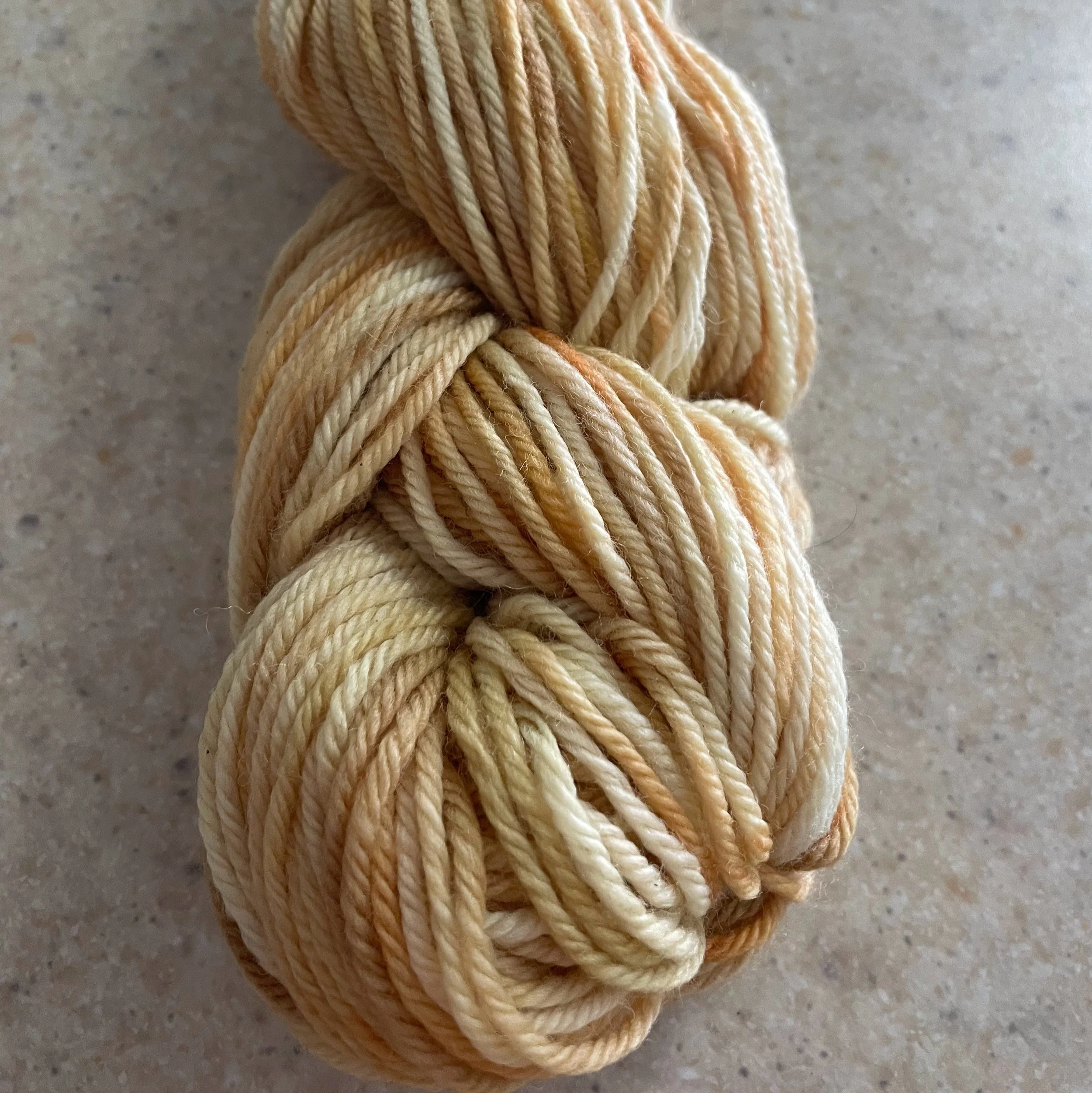
From bottom up: Golden Rod & Sunflowers, Yellow Onion Skins, Coffee
First let’s dive into everything that you’ll need for this project:
Mordant: I used Alum from the grocery store
Cream of tar tar (optional, but helps get deeper colors)
Wool yarn: I suggest superwash yarn for beginners because you won’t accidentally felt your yarn
Stainless Steel Dye pot
Tongs
Aluminum baking pan
Plants that you’ll be dyeing with: I will be using golden rod, sunflowers, yellow onion skins, and coffee!
Mordant Process
Before we can dye our yarn, we must mordant it! This process allows for the dyes to adhere on to our yarn. Think of it like velcro. If you don’t mordant your yarn, you risk a the natural dyes not sticking and very light colors. It’s annoying to do this step instead of diving straight into dyeing, but trust me, this step is necessary!
Mordant Ratio:
1 tablespoon alum per 100 grams of wool yarn
Optional: add ¼ teaspoon of cream of tar tar
Enough water to fully submerge the yarn in a stainless steel pot
Heat the water in a stainless steel pot, add the alum and cream of tartar. Mix until the alum has dissolved. Lower the temperature to a low setting and add yarn. Make sure you do not agitate the wool because it can easily felt together. Keep the yarn on a low heat for 1 hour, remove from heat, and set the pot in a safe area overnight. by keeping the yarn in the mordant solution overnight, it guarantees an even distribution of mordant throughout the wool.
After you let the yarn soak overnight, remove it from the mordant solution and rinse off the yarn. This step helps remove the alum molecules that did not fully attach to the yarn. By removing these extra molecules, it makes sure that the dye will fully adhere to the yarn and not “flake” off. You can either let the yarn dry and dye it later or dye it right away!
Dyeing Process
Collect the organic materials that you will be using to dye your yarn. Lighly simmer your chosen organic material in a pot of water to release the natural pigment for about an hour. You can either add your yarn directly to this dye pot for a full color dye, or you can spread your yarn skeins in an aluminum baking pan. For my example, I used the aluminum baking pan so that I could do a three color dye. I used golden rod & sunflowers for the yellow, yellow onion skins for the orange, and coffee for the brown.
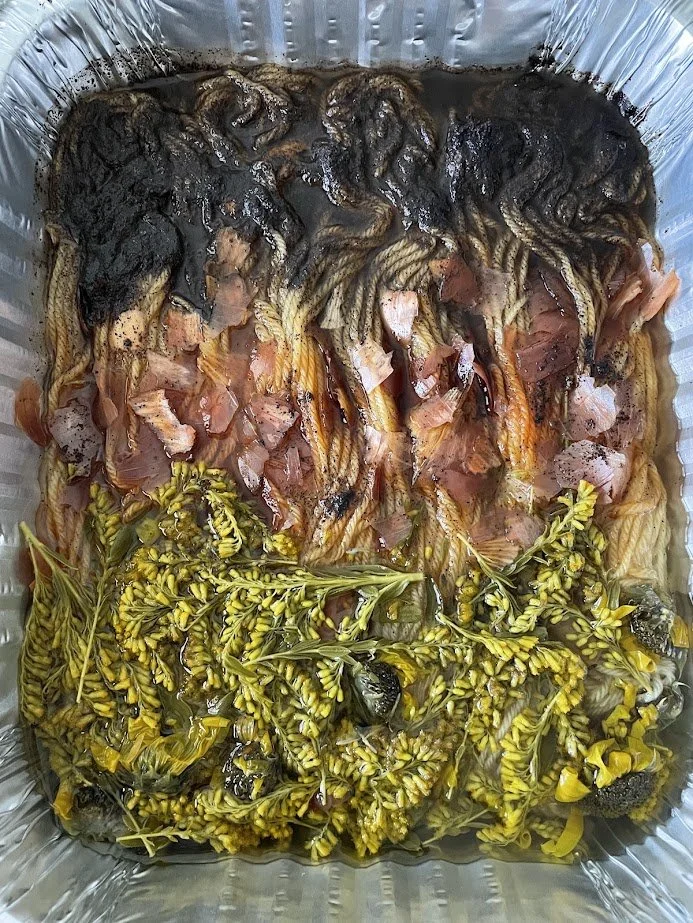
3 color dye in aluminum baking pan
Let your yarn soak in the dye bath for a minimum of 2 days. Once the two days have passed, rinse off the excess dye, and hang yarn to dry.
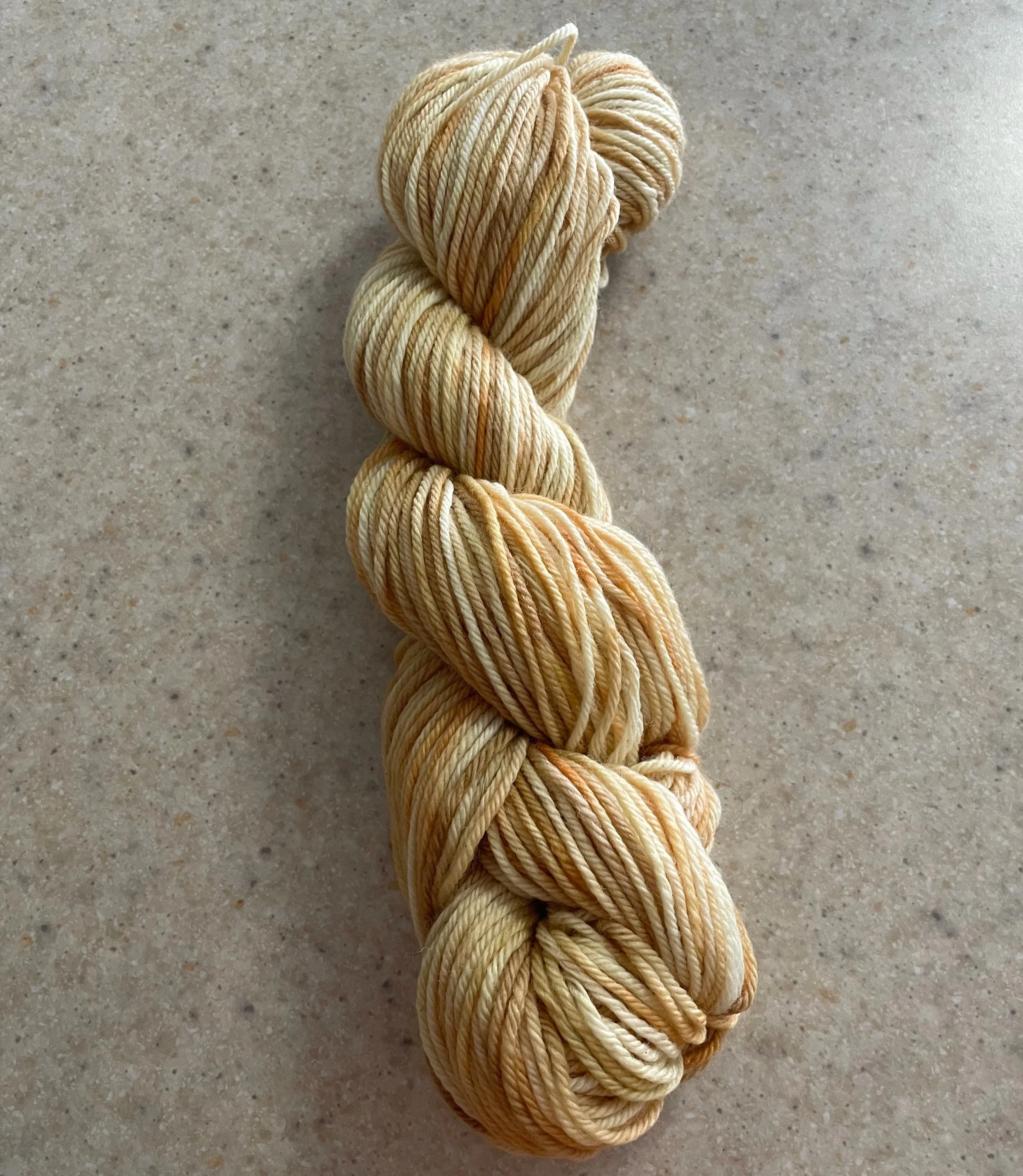
The final result of my natural dye experiment!